
3 Quizzes to Test Your Understanding of “Benkyō Suru(勉強する),” “Narau(習う),” and “Manabu(学ぶ)”
勉強する (benkyō suru) = to study(机に向かって努力する)/ 習う (narau) = to take lessons(先生から教えてもらう)/ 学ぶ (manabu) = to learn deeply(深く理解する・経験から得る)
There’s a quiz at the end, so check your understanding! 👉 クイズに進む / Go to the Quiz ↓
1. 勉強する(べんきょうする / benkyō suru)
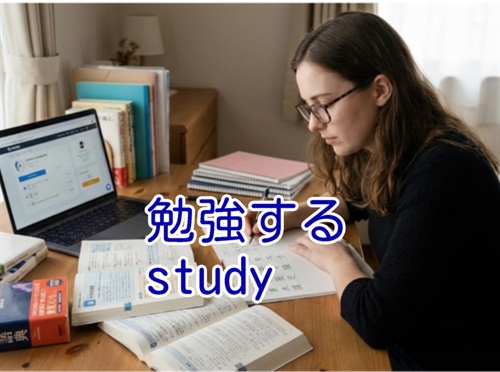
毎日2時間、日本語を勉強しています。
I study Japanese for two hours every day.
試験のために、昨日は夜おそくまで勉強しました。
I studied until late last night for the exam.
教科書を使って英語を勉強しています。
I’m studying English using a textbook.
“勉強する” pictures someone sitting at a desk, working hard with textbooks or notes. It doesn’t matter whether there’s a teacher — it’s about the act of putting in effort to study.
2. 習う(ならう / narau)
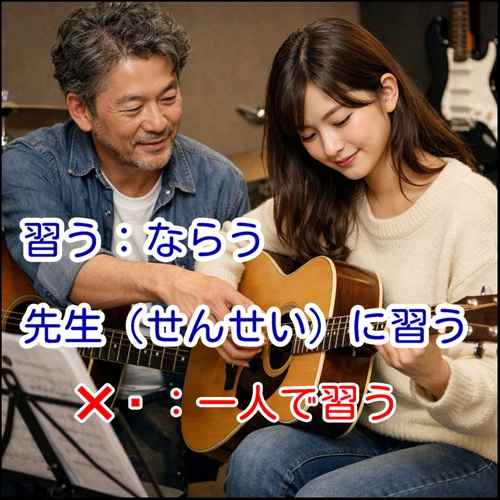
子どものころ、ピアノを習っていました。
I took piano lessons when I was a child.
今、料理教室でフランス料理を習っています。
I’m taking French cooking lessons at a cooking class right now.
先生に書道を習いに行っています。
I’m going to take calligraphy lessons from a teacher.
The key point of “習う” is that someone is teaching you. There’s always a teacher or coach involved. It’s often used for picking up a practical skill like piano, dance, or sports.
3. 学ぶ(まなぶ / manabu)
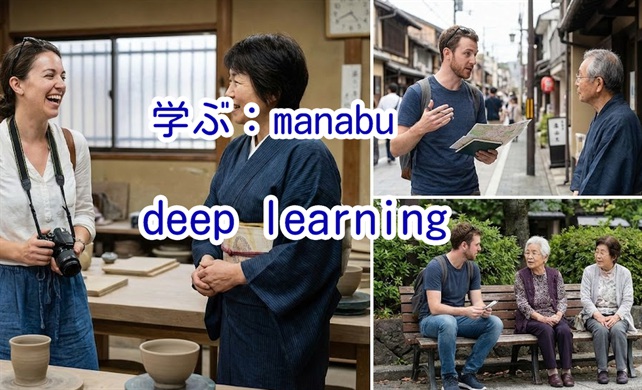
失敗から多くのことを学びました。
I learned a lot from my mistakes.
大学で経済学を学んでいます。
I am studying economics at university.
旅を通して、異なる文化について学んだ。
I learned about different cultures through traveling.
“学ぶ” carries the deepest nuance of the three. It covers not just desk study, but gaining insight from experience, failure, and life itself. It also sounds natural when talking about deep academic study or research in a specialized field.
📊 3つを比べてみよう / Comparing the Three
⭕ アニメを見ながら日本語を勉強しています。
I’m studying Japanese while watching anime.
⭕ 日本語を習おうと思って、先月から教室に通い始めました。
I decided to take Japanese lessons, so I started going to a class last month.
⭕ 日本に留学して、言語だけでなく文化も学びたい。
I want to study abroad in Japan and learn not just the language, but the culture too.
The physical act of sitting down and studying hard. → “to study (with effort)”
Being taught by someone else. A teacher or coach must be involved. → “to take lessons”
Gaining deep understanding through experience or reflection. Can also describe insights from life itself. → “to learn (deeply)”
| 動詞 | 中心のイメージ | 先生が必要? |
|---|---|---|
| 勉強する | 努力して机に向かう | いらない |
| 習う | 先生に教えてもらう | 必要 |
| 学ぶ | 深く理解する・経験から得る | いらない(経験でも可) |
✏️ クイズ / Quiz — ( )に入る言葉を選んでください。
Choose the best word to fill in the blank.
Q1. 子どものころ、母に連れられてバレエ教室に通い、バレエを( )いました。
Q2. JLPT N2に合格するために、毎晩1時間、文法と語彙を( )ています。
Q3. この経験を通して、チームワークの大切さを( )ことができた。