
How to Say “Toilet” in Japanese: トイレ, お手洗い, or 便所?
🎧 Hear It from a Native!
Real human voice — not AI ✅ / 100%ネイティブ録音
Quick answer: Use トイレ (toire) every day. Use お手洗い (otearai) to be polite — at work, in restaurants, or with people you don’t know well. You don’t need 便所 (benjo); it sounds old and rough.
🔊
All audio here is recorded by a native Japanese speaker — not AI. / 音声はすべて日本人ネイティブの録音です。
「トイレ」を表す言葉はたくさんあります。場所と相手で、使う言葉が変わります。
🚻 First: the signs you’ll see in Japan / 日本で見る表示
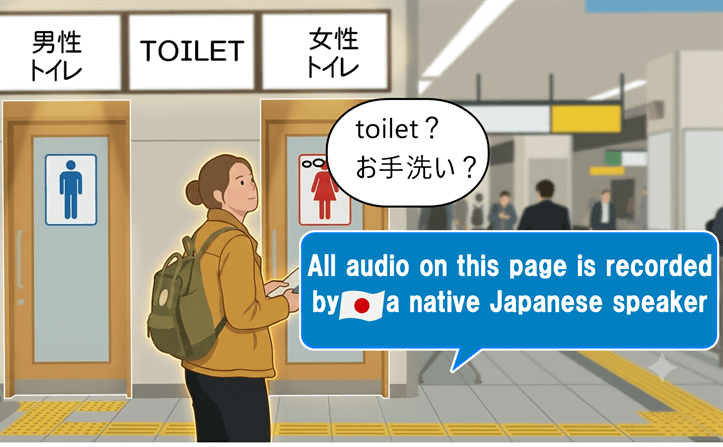
The sign may not say トイレ. Here is what you will really see:
| Sign / 表示 | Reading | Meaning |
|---|---|---|
| トイレ / TOILET / WC | toire | Toilet — the standard sign |
| お手洗い | otearai | Restroom (polite) — very common |
| 化粧室 | keshōshitsu | “Powder room.” It’s a normal toilet! |
| 男 / 女 | otoko / onna | Men / Women — learn these two kanji! |
✈️ The one phrase every traveler needs:
トイレはどこですか? (Toire wa doko desu ka?) — “Where is the toilet?”
1. トイレ(toire)— the everyday word
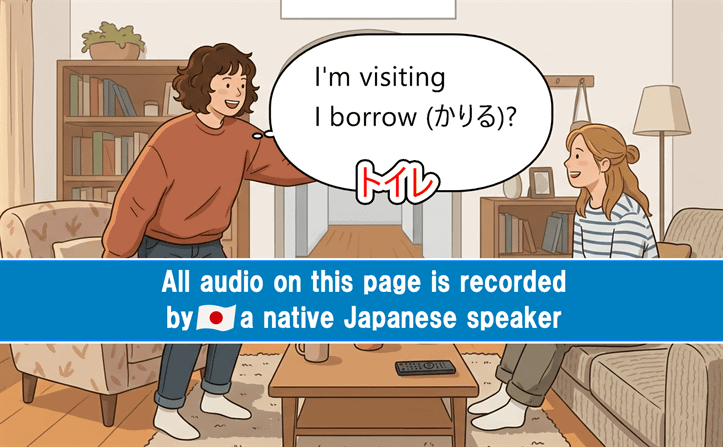
トイレ comes from the English word “toilet.” It is the most common word, and it is fine almost anywhere. It is not rude.
トイレは英語の “toilet” から来た言葉です。いちばんよく使います。どこでも使えます。失礼になりません。
💬 定番フレーズ / Key Phrases
| 場面 / Situation | フレーズ / Phrase |
|---|---|
| 友人に / With a friend | ちょっとトイレ行ってくるね。 I’m going to the bathroom. |
| 場所を聞く / Asking where it is | トイレはどこですか? Where is the toilet? |
| 自分の家で許可を求める / Asking at home | トイレ、行っていい? Can I go to the bathroom? |
同じトイレでも、自分の家は「行く」、人の家は「借りる」です。
| 場面 / Situation | フレーズ / Phrase |
|---|---|
| 自分の家で / At home | ちょっとトイレ行ってくるね。 I’m going to the bathroom. (行く) |
| 友だちの家で / At a friend’s house | ちょっとトイレ借りてもいい? Can I use your bathroom? (借りる) |
▶ Why “borrow”? / なぜ「借りる」?
2. お手洗い(otearai)— the polite word
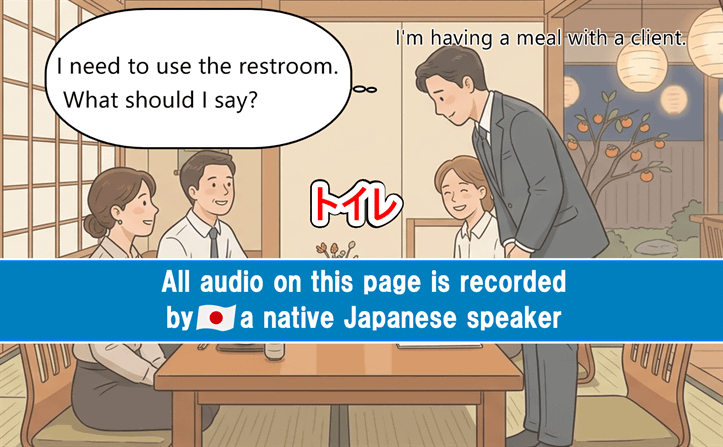
お手洗い means “a place to wash your hands.” It is polite and safe everywhere — at work, in restaurants, or with people you don’t know well.
お手洗いは「手を洗う場所」という意味です。丁寧で、どこでも安心して使えます。
💬 定番フレーズ / Key Phrases
| 場面 / Situation | フレーズ / Phrase |
|---|---|
| ビジネス・職場 / Business | 少々失礼します、お手洗いへ… Please excuse me for a moment. |
| レストランで場所を聞く / At a restaurant | すみません、お手洗いはどちらでしょうか? Excuse me, where is the restroom? |
| 人の家で借りる / At someone’s home | お手洗いをお借りしてもよろしいでしょうか? May I use your restroom? |
| 外出前に / Before going out | 出発前にお手洗いを済ませておいてください。 Please use the restroom before we leave. |
💡 Business tip: don’t leave during a meeting / 会議中は席を立たない
大切な会議の途中で席を立つのは、失礼だと思う人が多いです。ほとんどの人は会議の前に済ませます。
3. 便所(benjo)— the word you can skip
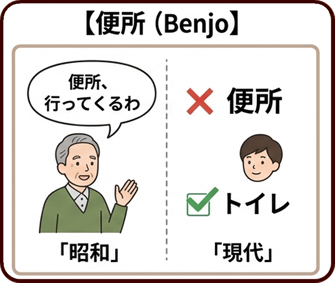
便 means “toilet waste,” so 便所 sounds rough. People stopped using it in daily talk about 20 years ago. You don’t need this word.
「便」は汚い意味なので、便所はきつい言い方に聞こえます。今はあまり使いません。
✅ Use トイレ or お手洗い instead.
▶ Where you might still see it / 今でも見る場面
今は建物の図面などの書き言葉で見ます。女性はほとんど使いません。
4. 洗面所(senmenjo)— 注意! / Watch out!
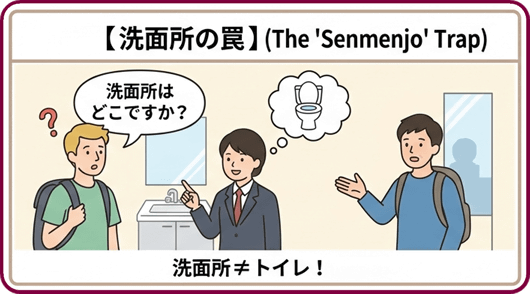
洗面所 is the room with a sink. It is NOT the toilet.
洗面所は「シンクがある部屋」です。トイレではありません。
🏠 In many Japanese homes, the toilet and the sink room are separate rooms.
🏠 日本の家では、トイレと洗面所は別の部屋のことが多いです。
✅ For the toilet, say: 「お手洗いをお借りしてもよろしいでしょうか?」
📊 Summary — which word to use? / どれを使う?
| 場面 / Situation | Best choice / おすすめ |
|---|---|
| 友人・家族 / Friends or family | ✅ トイレ |
| 職場・ビジネス / Work or business | ✅ お手洗い |
| レストラン / At a restaurant | ✅ お手洗い |
| 人の家 / Someone’s home | ✅ お手洗い |
| 迷ったとき / When not sure | ✅ お手洗い ← always safe! |
| Skip entirely / 使わない | ❌ 便所 |
| Looking for the toilet / トイレを探す | ❌ 洗面所(≠ toilet) |
一つだけ覚えるなら「お手洗い」。どこでも安心です。
With friends, トイレ is perfectly fine. When not sure, お手洗い is your best friend.
❓ FAQ — よくある質問
Polite: すみません、お手洗いはどちらでしょうか?
🌸 Fun corner / うんちくコーナー — 秘密の言葉
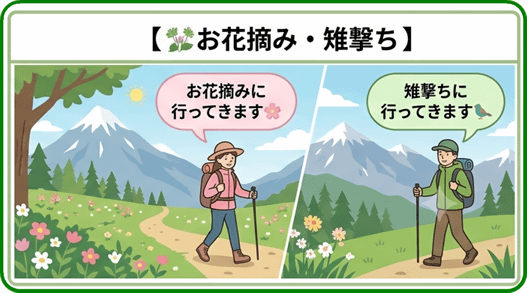
Japanese has some cute, secret ways to say “I’m going to the toilet.” / トイレを遠回しに言う面白い言葉があります。
「お花を摘む」という意味です。女性が使います。
▶ Where does it come from? / 由来
登山の言葉です。山にはトイレがないので、こう言いました。
「キジ(鳥)をとる」という意味です。男性が使います。
▶ Where does it come from? / 由来
These words show something nice about Japanese: a gentle way of speaking that softens things, so no one feels embarrassed.
日本語には、相手が恥ずかしくないように、やさしく言う文化があります。